Insights
"Just Type a Prompt and You're Done" — Tell That to the 7 Hours I Spent on One Loop
"Just Type a Prompt and You're Done" — Tell That to the 7 Hours I Spent on One Loop
There's a take I keep running into: AI creativity is cheating. Type a prompt into ChatGPT, hit enter, walla — instant art, instant content, instant win. No skill required, no work put in, just theft with extra steps.
There's a take I keep running into: AI creativity is cheating. Type a prompt into ChatGPT, hit enter, walla — instant art, instant content, instant win. No skill required, no work put in, just theft with extra steps.
There's a take I keep running into: AI creativity is cheating. Type a prompt into ChatGPT, hit enter, walla — instant art, instant content, instant win. No skill required, no work put in, just theft with extra steps.
I used to almost believe it myself, before I actually did the work.
Let me tell you about the first AI visual loop I ever built — for an artist opening for Zed's Dead at Jacobs Pavilion in Cleveland. We had one day. Not one week. One day. And when we sat down that morning, we didn't even have a starting point — just a deadline and a decision to crush it anyway.
Here's what "just type a prompt" actually looked like:
Learn the brand first. Before any tool got touched, we nailed down the tone — powerful, energetic, dark, exciting. Colors locked in. Without that, every image after this point is a guess.
Brainstorm the visuals. What is this loop even trying to say?
Plan the loop start to finish. Not "make something cool" — an actual sequence, beginning to end.
Build out a proper prompting structure for text-to-image generation, so we weren't reinventing the wheel on every single image.
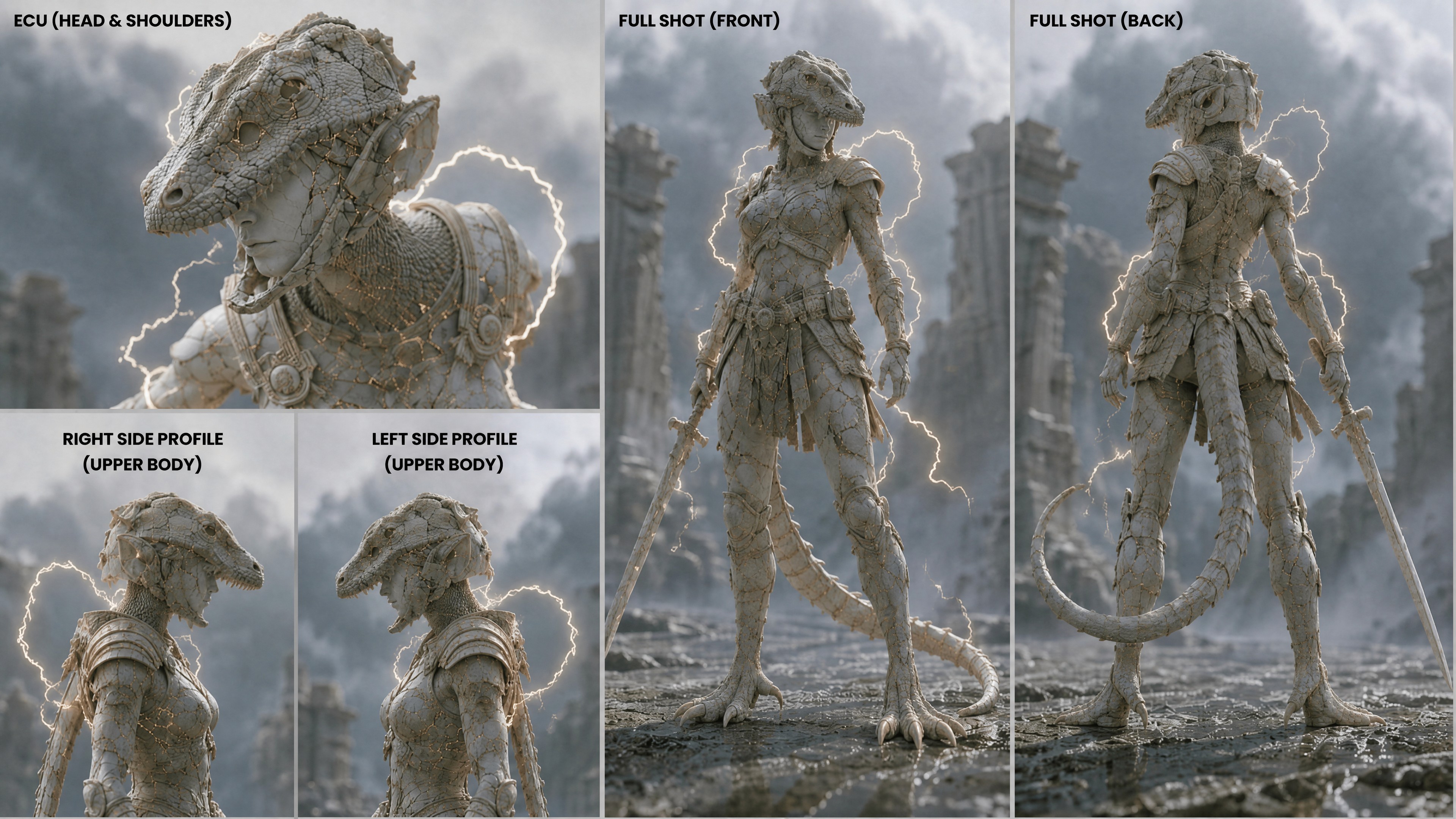
Generate the character. This alone took roughly 20 image generations before we had a winner — and even that winner wasn't perfect. We used Midjourney for this.
Build the environment using the brand identity we'd defined in step one.
Build a full character sheet using ChatGPT, so the character stayed consistent across every shot.
Try to place the character in the environment. This is where it fell apart. It looked so simple in our heads. It wasn't. We had to scrap the approach entirely and rework it.
Generate start and end frames for every clip. Five clips in the final loop meant regenerating frame pairs over and over using Magnific's Spaces workflow, refining each one against the brand and character sheet we'd already built.
Trial and error on the actual video generation — different tools, different quality settings. We generated somewhere around 30 video clips to land on the 5 that made the final cut.
Find out — too late — about a start-to-end frame feature that would've saved us two to three hours and given us cleaner transitions. We learned it on the last frame. That one stung, but that's how you actually get better.
Post-production edit to bring the five clips together into one finished loop.
Was it perfect? No. We had a hard deadline and zero room to be precious about it. But for a first attempt, built from nothing, in a single day — it came out great.

Here's my actual problem with the "cheating" argument
Nobody says a photographer is cheating because the camera does the actual light capture. Nobody says a producer is cheating because the DAW does the actual audio processing. The tool doing technical work has never been the definition of cheating. What separates a real creator from someone farming content is the same thing it's always been: taste, iteration, and the willingness to throw out the 25 attempts that didn't work to get to the one that does.
That project wasn't one prompt. It was dozens of decisions — brand tone before visuals, character consistency before environment, twenty image attempts before a usable one, thirty video generations before five got used, an entire approach getting scrapped mid-day because it didn't work. That's not what "walla, you get what you want" looks like. That's a production pipeline, and AI tools were the equipment inside it — not a replacement for the person running it.
The people calling this cheating usually haven't sat with the tools long enough to hit the wall we hit at step 8, where the "obvious" idea just doesn't work and you have to rebuild on the fly with the clock running. That wall is where the actual skill lives. Anyone can generate one pretty image. Not everyone can hold a brand identity, a character, an environment, and a five-clip narrative together into one coherent loop by end of day.

Where this is going
This was loop number one. I'm treating it as the floor, not the ceiling — every project from here builds on what step 11 taught me. That's the whole point of doing this in public: showing the process, not just the polished output, so the next person who thinks this is a one-click trick can see exactly what actually goes into it.
If you're building your own brand, your own visuals, your own presence and you're not sure whether AI tools fit into that — they do. But treat them like the equipment they are, not the shortcut people want them to be.
Stay Ahead
Get AI tools, brand tactics, and future-tech takes delivered straight to your inbox.
Latest Blogs

Stay Inspired
Get fresh design insights, articles, and resources delivered straight to your inbox.
Insights
"Just Type a Prompt and You're Done" — Tell That to the 7 Hours I Spent on One Loop
"Just Type a Prompt and You're Done" — Tell That to the 7 Hours I Spent on One Loop
There's a take I keep running into: AI creativity is cheating. Type a prompt into ChatGPT, hit enter, walla — instant art, instant content, instant win. No skill required, no work put in, just theft with extra steps.
There's a take I keep running into: AI creativity is cheating. Type a prompt into ChatGPT, hit enter, walla — instant art, instant content, instant win. No skill required, no work put in, just theft with extra steps.
There's a take I keep running into: AI creativity is cheating. Type a prompt into ChatGPT, hit enter, walla — instant art, instant content, instant win. No skill required, no work put in, just theft with extra steps.
I used to almost believe it myself, before I actually did the work.
Let me tell you about the first AI visual loop I ever built — for an artist opening for Zed's Dead at Jacobs Pavilion in Cleveland. We had one day. Not one week. One day. And when we sat down that morning, we didn't even have a starting point — just a deadline and a decision to crush it anyway.
Here's what "just type a prompt" actually looked like:
Learn the brand first. Before any tool got touched, we nailed down the tone — powerful, energetic, dark, exciting. Colors locked in. Without that, every image after this point is a guess.
Brainstorm the visuals. What is this loop even trying to say?
Plan the loop start to finish. Not "make something cool" — an actual sequence, beginning to end.
Build out a proper prompting structure for text-to-image generation, so we weren't reinventing the wheel on every single image.
Generate the character. This alone took roughly 20 image generations before we had a winner — and even that winner wasn't perfect. We used Midjourney for this.
Build the environment using the brand identity we'd defined in step one.
Build a full character sheet using ChatGPT, so the character stayed consistent across every shot.
Try to place the character in the environment. This is where it fell apart. It looked so simple in our heads. It wasn't. We had to scrap the approach entirely and rework it.
Generate start and end frames for every clip. Five clips in the final loop meant regenerating frame pairs over and over using Magnific's Spaces workflow, refining each one against the brand and character sheet we'd already built.
Trial and error on the actual video generation — different tools, different quality settings. We generated somewhere around 30 video clips to land on the 5 that made the final cut.
Find out — too late — about a start-to-end frame feature that would've saved us two to three hours and given us cleaner transitions. We learned it on the last frame. That one stung, but that's how you actually get better.
Post-production edit to bring the five clips together into one finished loop.
Was it perfect? No. We had a hard deadline and zero room to be precious about it. But for a first attempt, built from nothing, in a single day — it came out great.
Here's my actual problem with the "cheating" argument
Nobody says a photographer is cheating because the camera does the actual light capture. Nobody says a producer is cheating because the DAW does the actual audio processing. The tool doing technical work has never been the definition of cheating. What separates a real creator from someone farming content is the same thing it's always been: taste, iteration, and the willingness to throw out the 25 attempts that didn't work to get to the one that does.
That project wasn't one prompt. It was dozens of decisions — brand tone before visuals, character consistency before environment, twenty image attempts before a usable one, thirty video generations before five got used, an entire approach getting scrapped mid-day because it didn't work. That's not what "walla, you get what you want" looks like. That's a production pipeline, and AI tools were the equipment inside it — not a replacement for the person running it.
The people calling this cheating usually haven't sat with the tools long enough to hit the wall we hit at step 8, where the "obvious" idea just doesn't work and you have to rebuild on the fly with the clock running. That wall is where the actual skill lives. Anyone can generate one pretty image. Not everyone can hold a brand identity, a character, an environment, and a five-clip narrative together into one coherent loop by end of day.
Where this is going
This was loop number one. I'm treating it as the floor, not the ceiling — every project from here builds on what step 11 taught me. That's the whole point of doing this in public: showing the process, not just the polished output, so the next person who thinks this is a one-click trick can see exactly what actually goes into it.
If you're building your own brand, your own visuals, your own presence and you're not sure whether AI tools fit into that — they do. But treat them like the equipment they are, not the shortcut people want them to be.
Stay Ahead
Get AI tools, brand tactics, and future-tech takes delivered straight to your inbox.
Latest Blogs
Stay Inspired
Get fresh design insights, articles, and resources delivered straight to your inbox.
Insights
"Just Type a Prompt and You're Done" — Tell That to the 7 Hours I Spent on One Loop
"Just Type a Prompt and You're Done" — Tell That to the 7 Hours I Spent on One Loop
There's a take I keep running into: AI creativity is cheating. Type a prompt into ChatGPT, hit enter, walla — instant art, instant content, instant win. No skill required, no work put in, just theft with extra steps.
There's a take I keep running into: AI creativity is cheating. Type a prompt into ChatGPT, hit enter, walla — instant art, instant content, instant win. No skill required, no work put in, just theft with extra steps.
There's a take I keep running into: AI creativity is cheating. Type a prompt into ChatGPT, hit enter, walla — instant art, instant content, instant win. No skill required, no work put in, just theft with extra steps.
I used to almost believe it myself, before I actually did the work.
Let me tell you about the first AI visual loop I ever built — for an artist opening for Zed's Dead at Jacobs Pavilion in Cleveland. We had one day. Not one week. One day. And when we sat down that morning, we didn't even have a starting point — just a deadline and a decision to crush it anyway.
Here's what "just type a prompt" actually looked like:
Learn the brand first. Before any tool got touched, we nailed down the tone — powerful, energetic, dark, exciting. Colors locked in. Without that, every image after this point is a guess.
Brainstorm the visuals. What is this loop even trying to say?
Plan the loop start to finish. Not "make something cool" — an actual sequence, beginning to end.
Build out a proper prompting structure for text-to-image generation, so we weren't reinventing the wheel on every single image.
Generate the character. This alone took roughly 20 image generations before we had a winner — and even that winner wasn't perfect. We used Midjourney for this.
Build the environment using the brand identity we'd defined in step one.
Build a full character sheet using ChatGPT, so the character stayed consistent across every shot.
Try to place the character in the environment. This is where it fell apart. It looked so simple in our heads. It wasn't. We had to scrap the approach entirely and rework it.
Generate start and end frames for every clip. Five clips in the final loop meant regenerating frame pairs over and over using Magnific's Spaces workflow, refining each one against the brand and character sheet we'd already built.
Trial and error on the actual video generation — different tools, different quality settings. We generated somewhere around 30 video clips to land on the 5 that made the final cut.
Find out — too late — about a start-to-end frame feature that would've saved us two to three hours and given us cleaner transitions. We learned it on the last frame. That one stung, but that's how you actually get better.
Post-production edit to bring the five clips together into one finished loop.
Was it perfect? No. We had a hard deadline and zero room to be precious about it. But for a first attempt, built from nothing, in a single day — it came out great.
Here's my actual problem with the "cheating" argument
Nobody says a photographer is cheating because the camera does the actual light capture. Nobody says a producer is cheating because the DAW does the actual audio processing. The tool doing technical work has never been the definition of cheating. What separates a real creator from someone farming content is the same thing it's always been: taste, iteration, and the willingness to throw out the 25 attempts that didn't work to get to the one that does.
That project wasn't one prompt. It was dozens of decisions — brand tone before visuals, character consistency before environment, twenty image attempts before a usable one, thirty video generations before five got used, an entire approach getting scrapped mid-day because it didn't work. That's not what "walla, you get what you want" looks like. That's a production pipeline, and AI tools were the equipment inside it — not a replacement for the person running it.
The people calling this cheating usually haven't sat with the tools long enough to hit the wall we hit at step 8, where the "obvious" idea just doesn't work and you have to rebuild on the fly with the clock running. That wall is where the actual skill lives. Anyone can generate one pretty image. Not everyone can hold a brand identity, a character, an environment, and a five-clip narrative together into one coherent loop by end of day.
Where this is going
This was loop number one. I'm treating it as the floor, not the ceiling — every project from here builds on what step 11 taught me. That's the whole point of doing this in public: showing the process, not just the polished output, so the next person who thinks this is a one-click trick can see exactly what actually goes into it.
If you're building your own brand, your own visuals, your own presence and you're not sure whether AI tools fit into that — they do. But treat them like the equipment they are, not the shortcut people want them to be.
Stay Ahead
Get AI tools, brand tactics, and future-tech takes delivered straight to your inbox.
Latest Blogs
Stay Inspired
Get fresh design insights, articles, and resources delivered straight to your inbox.